
Tag Archives: women’s history

The Weekly Text, 14 March 2025, Women’s History Month Week II: A Reading and Comprehension Worksheet on Benazir Bhutto

For the second Friday of Women’s History Month 2025, the Weekly Text from Mark’s Text Terminal is this reading on Benazir Bhutto along with its accompanying vocabulary-building and comprehension worksheet. You may recall, if you are of a certain age, that she served twice as Prime Minister of Pakistan, from 1988 to 1990 and from 1993 to 1996.

She was, alas, assassinated in 2007.

If you find typos in these documents, I would appreciate a notification. And, as always, if you find this material useful in your practice, I would be grateful to hear what you think of it. I seek your peer review.

Dorothy Parker Schools a Young Playwright

“A young playwright, who Mrs. Parker felt had been copying her themes, described his most recent to play to her as follows: ‘It’s hard to say—except that it’s a play against all isms.’

Mrs. Parker added, ‘Except plagiarism.’”

Excerpted from: Drennan, Robert E., ed. The Algonquin Wits. New York: Kensington, 1985.

Cultural Literacy: Gloria Steinem

Here is a Cultural Literacy worksheet on Gloria Steinem. This is a half-page worksheet with a long, compound, one-sentence reading and one comprehension question. A spare, and I do mean spare, introduction to this important 20th century figure.

If you find typos in this document, I would appreciate a notification. And, as always, if you find this material useful in your practice, I would be grateful to hear what you think of it. I seek your peer review.

Helena Petrovna Blavatsky

“Helena Petrovna Blavatsky: (called Mme Blavatsky, 1831-1891) Russian-born spiritualist, medium, magician, and occultist. Blavatsky founded the Theosophical Society. She wrote Isis Unveiled (1877) and The Secret Doctrine (1888), influential books of occult lore. She toured India, Europe, and the U.S., developing and preaching her doctrines. The poet William Butler Yeats was profoundly influenced by her work.”

Excerpted from: Murphy, Bruce, ed. Benet’s Reader’s Encyclopedia, Fourth Edition. New York: Harper Collins, 1996.

Cultural Literacy: Ella Wheeler Wilcox

Here is a Cultural Literacy worksheet on Ella Wheeler Wilcox, who authored the famous, if insipid, saying “Laugh, and the world laughs with you; weep, and you weep alone.” Her biography is quite rich, and she was apparently prolific.

This is a half-page worksheet with a reading of three sentences and three comprehension questions. A spare, but effective, introduction to a poet who, I’ll hazard a guess, is largely forgotten–which arouses the question: is any poet remembered today?

If you find typos in this document, I would appreciate a notification. And, as always, if you find this material useful in your practice, I would be grateful to hear what you think of it. I seek your peer review.

Lydia Maria Child

“Lydia Maria Child originally Lydia Maria Francis: (1802-1880) U.S. abolitionist. Born in Medford, Massachusetts, she wrote historical novels and a popular manual, The Frugal Housewife (1829), and founded the first children’s periodical, Juvenile Miscellany. After meeting William Lloyd Garrison in 1831, she became active in abolitionist work. Her Appeal in Favor of That Class of Americans Called Africans (1833) was widely read and induced many to join the abolitionist cause. She edited the National Anti-Slavery Standard (1841-43) and made her home a stage on the Underground Railroad.”

­­­­­­­­­

Excerpted from: Stevens, Mark A., Ed. Merriam Webster’s Collegiate Encyclopedia. Springfield, Massachusetts: Merriam-Webster, 2000.
The Weekly Text, 7 March 2025, Women’s History Month Week I: A Reading and Comprehension Worksheet on Harriet Tubman

OK, we’ve rounded to corner to March, during which Mark’s Text Terminal, conforming to the latest consensus, observes Women’s History Month. The first Weekly Text for this month is this reading on Harriet Tubman along with its accompanying vocabulary-building and comprehension worksheet.

If you find typos in these documents, I would appreciate a notification. And, as always, if you find this material useful in your practice, I would be grateful to hear what you think of it. I seek your peer review.

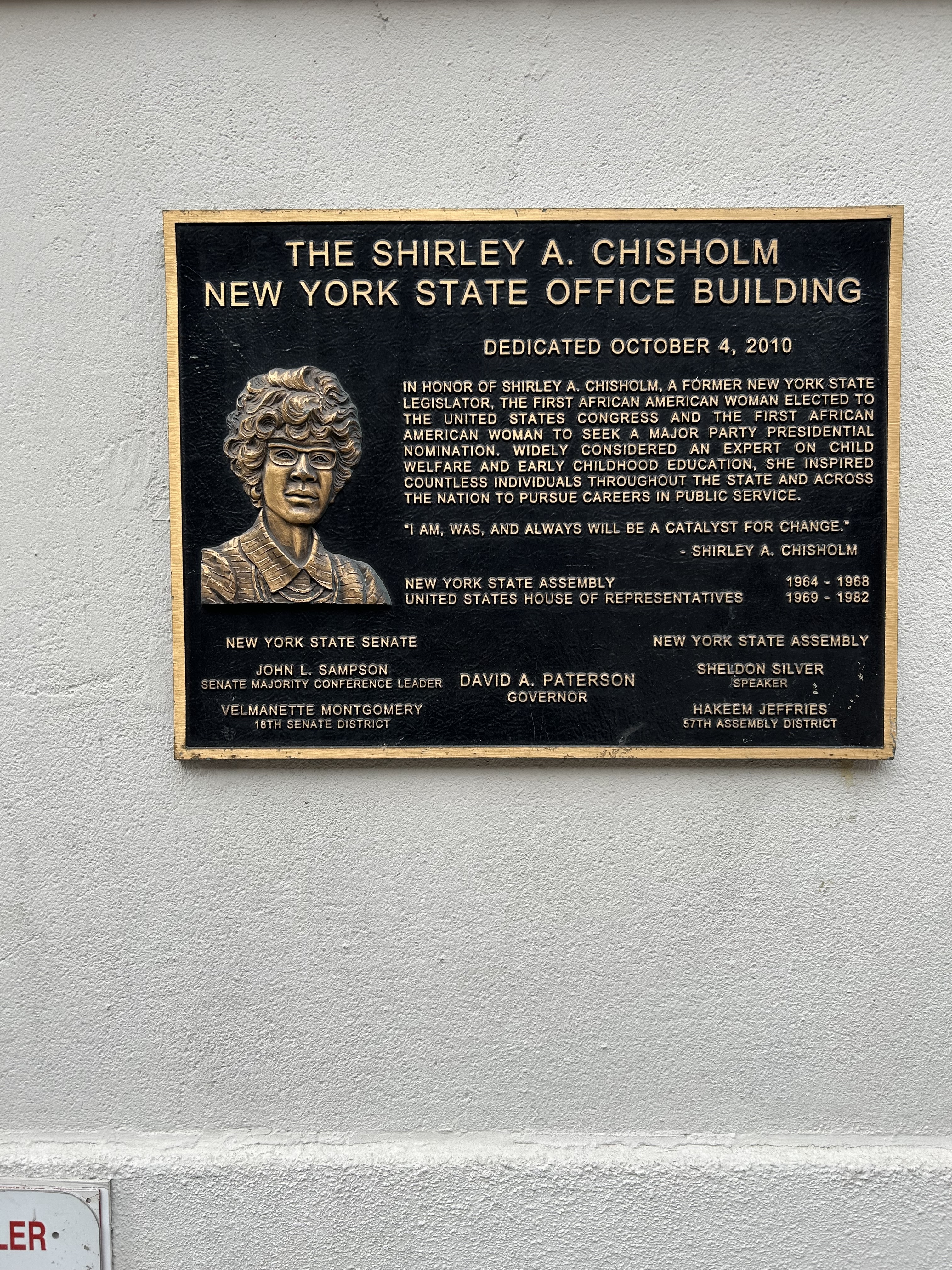
Places in Women’s History: Greenwich Village, New York, New York

IMG_0650

Joryu Bungaku

“Joryu Bungaku: Japanese term for ‘women’s writing.’ Although women played a significant literary role in the Heian era (794-1185), female writers all but disappeared in the succeeding periods of military turmoil. After struggling to reassert themselves in the late 19th century, women writers emerged in such numbers that by the 1920s, the term joryu bungaku, or ‘writing of the women’s school,’ was uniformly applied to any female-authored work. While protecting women from obliteration from the dominant male mainstream, the classification nevertheless restricted female literary expression to one prescribed by gender, and relegated all women writers, regardless of their artistic diversity, to a single ‘school.’ Disparate examples of joryo bungaku are Miyamoto Yuriko and Nogami Yaeko.”

Excerpted from: Murphy, Bruce, ed. Benet’s Reader’s Encyclopedia, Fourth Edition. New York: Harper Collins, 1996.

Grace Abbot

“Grace Abbot: (1878-1939) U.S. social worker, public administrator, educator, and reformer. Born in Grand Island, Nebraska, she did graduate work at the University of Chicago and began working at Jane AddamsHull House in 1908. That same year she cofounded the Immigrant’s Protective League in Chicago. As director of the U.S. Children’s Bureau 1921-1934, she fought to end child labor through legislation and federal contract policies, and proposed a constitutional amendment prohibiting child labor. Her best-known book is book is The Child and the State (2 volumes, 1938).”

­­­­­­­­­Excerpted from: Stevens, Mark A., Ed. Merriam Webster’s Collegiate Encyclopedia. Springfield, Massachusetts: Merriam-Webster, 2000.