Tag Archives: film/television/photography

Cultural Literacy: Noble Savage

OK, here is a Cultural Literacy worksheet on noble savage archetype. This is a half-page worksheet with a three sentence reading and three comprehension questions.

This was a concept, I can say with some pleasure, that my high school teachers disabused me of quickly. It’s a good thing, too, because (“Surprise! Surprise! Surprise!” as I delighted in hearing Gomer Pyle USMC say when I watched that show as a child), despite what this worksheet avers in placing the origin of this concept with Jean-Jacques Rousseau, it turns out not to be the case.

In fact, in addition to the many problems implicit in the term itself, it happens that Rousseau never uttered the term, and that the concept and the linguistic clothes it wears are the product of poet and playwright John Dryden, who invoked the stereotype in his play The Conquest of Granada by the Spaniards. When the term is next heard, it is from the mouths of physician James Crawfurd and anthropologist James Hunt, who erected the term as a signpost en route to scientific racism. Apparently, in the process of their “work,” Crawfurd deliberately misattributed noble savage to Rousseau.

So, with this short document, there is a lesson on debunking that I will write sometime in the future. I can tell you that only the most cursory research yielded the results in the foregoing paragraph. So, there is quite a bit of juicy stuff here–especially for inquisitive high school students.

Finally, if you want to see the decisive send-up of the noble savage stereotype (or, alternatively, if you’re interested in trying some excellent series television), check out Dallas Goldtooth’s hilarious performance as William “Spirit” Knifeman in Reservation Dogs–one of the best things ever to appear on television in my opinion.

If you find typos in this document, I would appreciate a notification. And, as always, if you find this material useful in your practice, I would be grateful to hear what you think of it. I seek your peer review.

The Weekly Text, 26 July 2024: A Lesson Plan on Motion Picture Genres from The Order of Things

Once again, from Barbara Ann Kipfer’s sublime reference book The Order of Things, here is a lesson plan on motion picture genres. To deliver this lesson (and bear in mind that any lesson under the heading of The Order of Things on this blog was designed for emergent and struggling readers as well as students of English as a new language) you will need this worksheet with reading and comprehension questions.

If you find typos in these documents, I would appreciate a notification. And, as always, if you find this material useful in your practice, I would be grateful to hear what you think of it. I seek your peer review.

Image

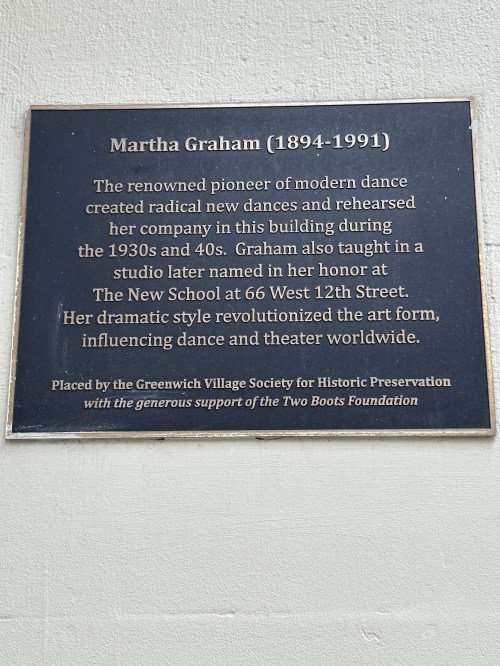
Places in Women’s History: Greenwich Village, New York, New York

IMG_0649

Cultural Literacy: Alice Paul

Here is a Cultural Literacy worksheet on Alice Paul. This is a full-page document with a reading of four sentences, all of them long, and the first a compound separated by a semicolon, and six comprehension questions. This worksheet is long enough to serve as independent practice, otherwise known as homework.

Did you know that Alice Paul was the first, in 1923, to write and propose an Equal Rights Amendment to the United States Constitution? You know, the one Phyllis Schlafly worked so hard to defeat in the 1970s? If you watched the FX miniseries Mrs. America  (which includes the extraordinary Uzo Aduba as Shirley Chisolm) you know something about this. Alice Paul also worked for the ratification of the 19th Amendment, affirming a woman’s right to vote, to the United States Constitution.

If you find typos in this document, I would appreciate a notification. And, as always, if you find this material useful in your practice, I would be grateful to hear what you think of it. I seek your peer review.

The Weekly Text, 1 March 2024, Women’s History Month Week 1: A Reading and Comprehension Worksheet on Barbie

She has had a big year with her hit movie, so here, for the first Friday of Women’s History Month 2024 is this reading on Barbie along with its accompanying vocabulary-building and comprehension worksheet. The reading, from the The Intellectual Devotional Modern Culture, takes a crisply and, to my mind, surprisingly critical look at Barbie. I gather the the film does the same, though I have not seen it.

If you find typos in these documents, I would appreciate a notification. And, as always, if you find this material useful in your practice, I would be grateful to hear what you think of it. I seek your peer review.

Cultural Literacy: Roots

Here is a Cultural Literacy worksheet on the television miniseries RootsI admit with mild to moderate chagrin that I have never seen this highly acclaimed series–nor read the book. They were both au courant at a time in my life (high school) when I had other things on my mind, had given up television as a vast wasteland, and was in general alienated from the mainstream of American culture. Roots was part of that mainstream, I am happy to say in retrospect, and I need to read it, watch it, or both.

In any event, this is a half-page worksheet with a reading of  two modestly complex sentences and two comprehension questions. Just the basics in a low-key, symmetrical introduction.

If you find typos in this document, I would appreciate a notification. And, as always, if you find this material useful in your practice, I would be grateful to hear what you think of it. I seek your peer review.

The Weekly Text, 23 February 2024, Black History Month 2024, Week IV: Alex Wheatle Lesson 5

For the fifth and final Friday of Black History Month 2024, here is the fifth and final lesson of a unit on the life and times of Alex Wheatle. I open this lesson with this Cultural Literacy worksheet on social class.

This unit final assessment is the principal work for this lesson, and for the unit itself. You will note that it is a broad melange of tasks. I prepared this document with the idea that I would rarely, if ever, use it in its entirety. Rather, I would pick and choose among the questions and writing imperatives for what best suited the needs and abilities of a whole class in general and single students in particular. In other words, this document was prepared for ease of differentiation.

If you find typos in these documents, I would appreciate a notification. And, as always, if you find this material useful in your practice, I would be grateful to hear what you think of it. I seek your peer review.

Image

Places in Black History: 70 Fifth Avenue, Greenwich Village, New York, New York

70 Fifth Avenue Plague

The Weekly Text, 26 January 2024, Black History Month 2024, Prelude: Alex Wheatle Lesson 1

Black History Month 2024 begins a week early this year at Mark’s Text Terminal. I have a five-lesson unit on British young adult novelist Alex Wheatle to offer for this year’s Black History Month. Since Weekly Texts publish on Fridays, and there are only four Fridays in February, well, here we are.

Have you (and I understand I have previously asked this question on this blog) watched Small Axe, Steve McQueen’s quintet of films about Britons of West Indian descent in London in the 1970s and 1980s? The Fourth film in the series, Alex Wheatle, is about its namesake. It’s a fine film and I can’t resist calling attention to the talents of its leading man, the sublime Sheyi Cole.

When I watched Alex Wheatle for the second time, I’d been casting my net for material relevant to the lives of my predominantly Afro-Caribbean students in South Central Brooklyn. Once I’d sussed out the real Alex Wheatle, his bona fides and his accomplishments, I knew I had the ingredients for an English Language Arts unit on literary history, and especially post-colonial literary history.

Because you may want to develop this unit further (and as always, I would be interested to hear where and how you think it might be expanded), let’s start with the planning materials. First, here is the unit plan with the usual explanations and justifications–backed, of course, with the Common Core Standards addressed therein. The aggregated text for the entire unit, that is the worksheets in each lesson, are in a 14-page document under that hyperlink. Should you decide to take this unit further (and I think there is plenty of room in it for expansion, or to link it to other films in the Small Axe suite), here are the lesson plan template and the worksheet template. Finally, where this unit’s infrastructure is concerned, here are some notes toward greater clarity in some of the issues this unit deals with.

OK, this first lesson is centered around “The Guns of Brixton,” a song by The Clash, that paints a grim picture of the South London neighborhood named in the song’s title. I open this lesson with this Cultural Literacy worksheet on colonialism. Here are the lyrics to “The Guns of Brixton.” which serve as the reading for this lesson. Finally, here is the comprehension and analysis worksheet that attends the reading.

At the risk of prolixity, I feel a need to justify the use of a song by The Clash, especially a song as bleak as “The Guns of Brixton,” as the opening lesson in this unit. The answer remains in formulation, but I can tell you that Paul Simonon, the bass player in the The Clash, grew up in Brixton and therefore around reggae music. The Clash loved reggae and wrote and recorded their own punked-up versions of it, and more faithfully to the genre, recorded the great songs “Armagideon Time,” written and originally recorded by Willie Williams, and which I occasionally hear to great delight playing in cars around Brooklyn, and “Bankrobber,” of which Clash confederate Mikey Dread recorded a dub version. Another reason to start with The Clash derives from the three-part documentary series from Steve McQueen, Uprising (which, incidentally, would be a place to start in expanding this unit, should you see fit: both Alex Wheatle and Linton Kwesi Johnson, whose poem “New Crass Massakah” is dealt with in lesson three of this unit, appear in these films, which backstops Small Axe nicely. In one of those films, one of the members of the British reggae band Steel Pulse (it might have been David Hinds–I watched these movies three years ago, and while I mean to return to them, I haven’t yet, so it also might have been one of the members of UB40) recounts that at street demonstrations against police brutality, racism, and the general political horror of the National Front that preceded the 1981 Brixton Riot (which its participants probably more rightly call an uprising), he was surprised to see white punk-rockers among the demonstrators. The Clash certainly made no secret of their own generally leftist and specifically anti-racist politics. And let’s not forget Rock Against Racism, an organization made up of musical stars across genres in Britain, which was in its heyday in the late 1970s and early 1980s. In fact, it occurs to me as I write this, it wouldn’t be hard to come up with a lesson on building political and social coalitions using Rock Against Racism as a model.

OK, enough said.

If you find typos in these documents, I would appreciate a notification. And, as always, if you find this material useful in your practice, I would be grateful to hear what you think of it. I seek your peer review.

The Weekly Text, 1 December 2023, National Native American Heritage Month Week IV: A Reading and Comprehension Worksheet on Tupac Amaru

For the fourth and final Friday of National Native American Heritage Month 2023, here is a reading on Tupac Amaru II with its attendant vocabulary-building and comprehension worksheet. If you recognize this name, it is because, as you have probably already inferred, this eighteenth-century rebel against the Spanish colonial presence moved Afeni Shakur to name her son Tupac Amaru Shakur, who is of course the late, lamented, Hip-Hop star.

You’ll also find Tupac Amaru II in a namesake organization, the Tupamaros, a rebel group in Uruguay in the 1960s and 1970s. They were famous for urban guerilla actions in Montevideo like hijacking grocery delivery trucks, driving them into poor districts in that city, opening them, then walking away–which, editorially speaking, appears to meet or exceed the accepted standards for efficiency and effectiveness in such actions. The Tupamaros also, in one particularly famous incident, got their hands on Dan Mitrione, who was in Uruguay on behalf of the United States Central Intelligence Agency to teach torture techniques to various of the Uruguayan security services.

If you’re interested in learning more about the Tupamaros, the justly famous film by Costa-Gavras, State of Siege, tells the story of the kidnapping and murder of Dan Mitrione, often with actual documentary footage. Also, Netflix offers a documentary series on Jose Mujica,  who fought with the Tupamaros, and later became president of Uruguay, called El Pepe: A Supreme Life. President Mujica is known affectionately as “El Pepe,” apparently a Spanish nickname for Jose.

If you find typos in these documents, I would appreciate a notification. And, as always, if you find this material useful in your practice, I would be grateful to hear what you think of it. I seek your peer review.