
Tag Archives: drama/theater

Chingiz Aitmatov

“Chingiz Aitmatov: (1928-2008) Kirghiz novelist, short-story writer, and playwright. Born in the Central Asian republic of Kirghizia, Aitmatov inherited a love for Russian literature from his father (who died in 1937, a victim of Stalin’s terror) and for traditional Kirghiz folktales and customs from his mother. In 1952 he qualified as a veterinary technician and published his first story. After a period of study in Moscow, Aitmatov returned home to work as a journalist in 1958 and soon gained a national reputation with the publication in the journal Novy mir of ‘Jamilya’ (1959), a love story that challenged both traditional Kirghiz custom and the new ‘socialist’ morality. This and other short stories were followed by two thoughtful novels, Proschai, Gulsary! (1966; tr Farewell, Gulsari, 1970) and Bely parakhod (1970; tr The White Ship, 1972). Aitmatov is best known in the West for his play (written with Kaltai Mukhamedzhanov) Voskhozhdenie na Fudzhiamu (1973; tr The Ascent of Mount Fuji, 1975). A subtle treatment of the suppression of dissidents, it caused a sensation when first produced in Moscow in 1973. One of the few genuinely talented writers to emerge from the government’s drive to transform the non-Russian nationalities into parts of the total Soviet state, Aitmatov began increasingly to criticize the impact of Russification, collectivization, and a non-nomadic way of life on traditional Kirghiz society. A subsequent work to appear in English is the novel The Day Is Longer Than a Hundred Years (1980; tr 1983). One of this most recent works, Plaka (The Executioner’s Block, 1986) was received with much interest in Russia.”

Excerpted from: Murphy, Bruce, ed. Benet’s Reader’s Encyclopedia, Fourth Edition. New York: Harper Collins, 1996.
Cultural Literacy: Othello

Here is a Cultural Literacy worksheet on Shakespeare’s play Othello. This is a full-page worksheet with a reading of four sentences and five comprehension questions. It is a relatively spare synopsis of the play, so I wonder how useful it might be. It could serve as a do-now–which is what most of the Cultural Literacy worksheet on this site are intended to do.

If you find typos in this document, I would appreciate a notification. And, as always, if you find this material useful in your practice, I would be grateful to hear what you think of it. I seek your peer review.

Cultural Literacy: Sarah Bernhardt

OK, it’s just about time to leave for school, but finally this morning here is a Cultural Literacy worksheet on Sarah Bernhardt. This is a half-page document with a reading of two sentences and two comprehension questions. In other words, the sparest of introductions to this major figure in French culture.

If you find typos in this document, I would appreciate a notification. And, as always, if you find this material useful in your practice, I would be grateful to hear what you think of it. I seek your peer review.

Image

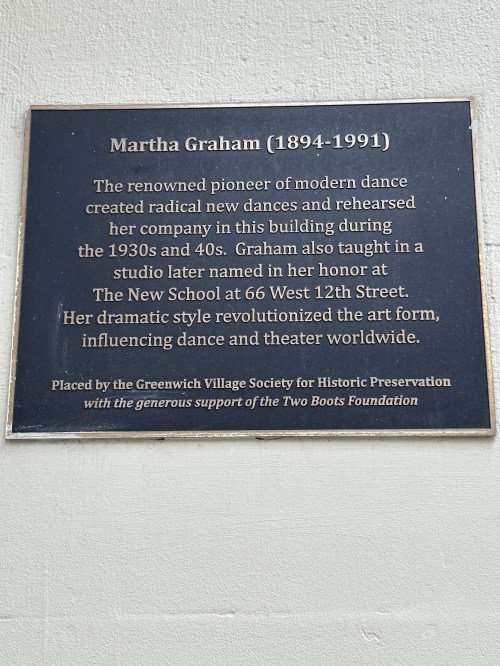
Places in Women’s History: Greenwich Village, New York, New York

IMG_0649

Book of Answers: Troilus and Criseyde, Troilus and Cressida

When was Chaucer’s Troilus and Criseyde written?  Between 1385 and 1390.

When was Shakespeare’s Troilus and Cressida written? It was first performed around 1602 and first published in 1609.

Excerpted from: Corey, Melinda, and George Ochoa. Literature: The New York Public Library Book of Answers. New York: Simon and Schuster, 1993.

Salvador Elizondo

“Salvador Elizondo: (1932-2006) Mexican writer. Linked to the post-Boom writers like Sarduy and Rodriguez Julia, Elizondo is a writer’s writer, with a strong affinity to Borges. In junior high school he lived in in California, which would form the setting for his novella Elsinore (1988). His first collection of stories, Narda o el Verano (1964), contained ‘Historia de Pao Cheng,’ in which the title character leans over a writer’s shoulder to find out that he is a character in the story, and that, should the story end, he will die. The tale synthesizes many of Elizondo’s concerns about the nature of the creative process, the role of the writer and reader, and forms the basis of his novel El hipogeo secreto (1968). Farabeuf (1965; tr Farabeuf, The Chronicle of an Instant, 1992), his first novel, won the Villaurrutia Prize and established him internationally. It chronicles the obsession of a couple with a Chinese form of torture known as ‘Leng t’che,’ but through the use of images and ideograms becomes a hallucinatory, exquisitely written meditation on the insufficiencies and dangers of words. Elizondo has published a play, Miscast (1981), and books of critical prose, including Estanquillo (1993). His Cuaderno de Escritura (1969), ‘a writer’s notebook,’ contains a phrase that admirably sums up his aesthetic: ‘Scribo ergo sum.’”

Excerpted from: Murphy, Bruce, ed. Benet’s Reader’s Encyclopedia, Fourth Edition. New York: Harper Collins, 1996.

Francesco Arrivi

“Francesco Arrivi: (1915-2007) Puerto Rico’s most important dramatist. Arrivi’s early plays, such as El diablo se humaniza (1940), Club de solteros (1940) and Alumbramiento (1945), were realistic social documentaries. His later work grew increasingly poetic, with more carefully drawn characters, as in his trilogy about Puerto Rico’s history and people, Mascara puertorrignena ((1971).”

Excerpted from: Murphy, Bruce, ed. Benet’s Reader’s Encyclopedia, Fourth Edition. New York: Harper Collins, 1996.

George Bernard Shaw on Art

“Without art, the crudeness of reality would make the world unbearable.”

George Bernard Shaw

Excerpted from: Winokur, Jon, ed. The Portable Curmudgeon. New York: Plume, 1992.

Casablanca

Do you have any cinephiles (or cineastes, if you prefer) on your hands this summer? Fans of Turner Classic Movies (which has been in the news lately), perhaps? If so, this reading on the film classic Casablanca and its accompanying vocabulary-building and comprehension worksheet might be useful. This is a reading from the Intellectual Devotional series, so a full page of text, along with my standard configuration for the worksheet: eight vocabulary words to define, eight comprehension questions, and the usual one to three “Additional Facts” questions–in this reading, it is three questions under that heading.

If you find typos in these documents, I would appreciate a notification. And, as always, if you find this material useful in your practice, I would be grateful to hear what you think of it. I seek your peer review.

Book of Answers: Christopher Isherwood and Cabaret

What work by Christopher Isherwood was the basis for the musical Cabaret (1968)? Cabaret was based on the play I Am a Camera (1951) by John Van Druten, which was in turn based on Isherwood’sSally Bowles,” a story appearing in Goodbye to Berlin. Isherwood lived in Berlin in the early 1930s.

Excerpted from: Corey, Melinda, and George Ochoa. Literature: The New York Public Library Book of Answers. New York: Simon and Schuster, 1993.