
Tag Archives: asian-pacific history

Cultural Literacy: Zhou En-Lai

Here is a Cultural Literacy worksheet on Zhou En-Lai. This is a half-page document with a reading of three sentences ranging from simple to relatively simple, and three comprehension questions. It is, therefore, the sparest of biographies on a founder of the Chinese Communist Party and ally of Mao Zedong.

If you find typos in this document, I would appreciate a notification. And, as always, if you find this material useful in your practice, I would be grateful to hear what you think of it. I seek your peer review.
Joryu Bungaku

“Joryu Bungaku: Japanese term for ‘women’s writing.’ Although women played a significant literary role in the Heian era (794-1185), female writers all but disappeared in the succeeding periods of military turmoil. After struggling to reassert themselves in the late 19th century, women writers emerged in such numbers that by the 1920s, the term joryu bungaku, or ‘writing of the women’s school,’ was uniformly applied to any female-authored work. While protecting women from obliteration from the dominant male mainstream, the classification nevertheless restricted female literary expression to one prescribed by gender, and relegated all women writers, regardless of their artistic diversity, to a single ‘school.’ Disparate examples of joryo bungaku are Miyamoto Yuriko and Nogami Yaeko.”

Excerpted from: Murphy, Bruce, ed. Benet’s Reader’s Encyclopedia, Fourth Edition. New York: Harper Collins, 1996.

The Weekly Text, 3 May 2024, Asian American Pacific Islander Heritage Month Week I: A Reading and Comprehension Worksheet on Taoism

Today begins Asian American Pacific Island Heritage Month 2024, and hence the observance of it on this blog. The first Text for this month is this reading on Taoism along with its accompanying vocabulary-building and comprehension worksheet. Like all Weekly Texts this month, this material is drawn and adapted from the Intellectual Devotional series of books.

If you find typos in these documents, I would appreciate a notification. And, as always, if you find this material useful in your practice, I would be grateful to hear what you think of it. I seek your peer review.

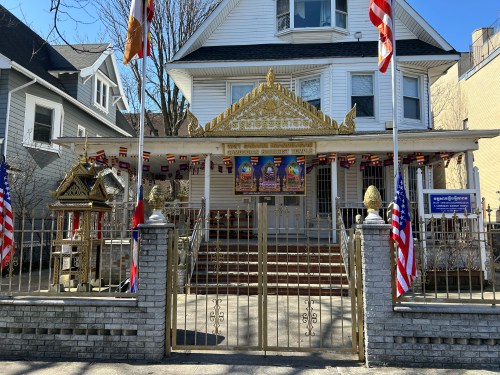
Places in Asian American Pacific Islander History: Prospect Park South, Brooklyn, New York

IMG_0662

Seth’s 73 Accomplices

“Although we do not know their names, the god Seth enlisted seventy-three accomplices when he tricked his brother-god Osiris. He enticed Osiris into coming to a feast, then, as an after-dinner game, the seventy-three joyfully took their turn in trying to fit into a cedar box. They all failed, for it had been manufactured to fit exactly the frame of Osiris, who—once he had entered—was held fast in a vice that allowed his brother to slam down the lid, seal the box and throw him into the Nile. There, he sailed out into the wide sea and was eventually washed ashore on the coast of Lebanon at Beirut.”

Excerpted from: Rogerson, Barnaby. Rogerson’s Book of Numbers: The Culture of Numbers–from 1,001 Nights to the Seven Wonders of the World. New York: Picador, 2013.

Asia

“Asia: (1) In classic mythology, one of the Oceanides, usually spoken of as wife of Iapetus and mother of Prometheus. In his ‘Prometheus Unbound,’ Shelley makes Asia play an important part as Prometheus’ wife.

(2) According to the Koran, the wife of the Pharaoh who brought up Moses. Asia’s husband tortured her for believing in Moses, but she was taken alive into Paradise. Muhammad numbers her among the four perfect women.”

Excerpted from: Murphy, Bruce, ed. Benet’s Reader’s Encyclopedia, Fourth Edition. New York: Harper Collins, 1996.

Cultural Literacy: Ho Chi Minh City

Alright, let’s move along this morning with this Cultural Literacy worksheet on Ho Chi Minh City. This is a half-page document with a spare, one-sentence reading and two comprehension questions. If you need your students to understand why Saigon no longer exists, this document will help with that, but little more.

If you find typos in this document, I would appreciate a notification. And, as always, if you find this material useful in your practice, I would be grateful to hear what you think of it. I seek your peer review.

Ho Chi Minh with Some Familiar Words

“All men are created equal; they are endowed with by their creator with certain inalienable rights; among these are Life, Liberty, and the pursuit of happiness. This immortal statement was made in the Declaration of Independence of the United States of America in 1776. In a broader sense, this means: All the peoples on earth are equal from birth, all the peoples have a right to live, to be happy and free.”

Ho Chi Minh, Proclamation of Independence, 2 Sept. 1945

Excerpted from: Schapiro, Fred, ed. The Yale Book of Quotations. New Haven: Yale University Press, 2006.

Cultural Literacy: Karachi

If you can use it, here is a Cultural Literacy worksheet on Karachi, the largest city in Pakistan. This is a half-page document with a two-sentence reading, the first of which is a longish compound separated by a semicolon; there are three comprehension questions.

If you find typos in this document, I would appreciate a notification. And, as always, if you find this material useful in your practice, I would be grateful to hear what you think of it. I seek your peer review.

Massacre of Amritsar

“Massacre of Amritsar: (1919) Incident in which British troops fired on a crowd of Indian protesters. In 1919 the British government of India enacted the Rowlatt act, extending its World War I emergency powers to combat subversive activities. On April 13th a large crowd gathered to protest the measures and troops opened fire, killing about 379 and wounding about 1,200. The massacre was the prelude to Mahatma Gandhi’s noncooperation movement of 1920-1922.”

Excerpted from: Stevens, Mark A., Ed. Merriam Webster’s Collegiate Encyclopedia. Springfield, Massachusetts: Merriam-Webster, 2000.