
Tag Archives: film/television/photography

The Weekly Text, 8 August 2025: Lesson Seven of a Unit on Writing Reviews

OK–after eight weeks of drafting these posts, this week’s Text is seventh and final lesson plan of a unit on writing reviews. Since this lesson concludes the unit and turns students loose to write their reviews, I have included four Cultural Literacy worksheets as do-now exercises with the idea that students will need at least four days to write and revise their compositions. So here are those documents on hyperbole, nuance, analogy, and paraphrase. Each of these worksheet is a half-page long with short readings and three or fewer comprehension questions.

At this point in the unit, students should have their thoughts on their review outlined, and, therefore, in a final state of organization. So this short organizer is the worksheet for this lesson, and simply asks students a few final clarifying questions on their planned paper. This is for their benefit, and one final clarifying exercise.

If you find typos in these documents, I would appreciate a notification. And, as always, if you find this material useful in your practice, I would be grateful to hear what you think of it. I seek your peer review.

The Doubter’s Companion: Biographical Films

“Biographical Films: Since attention to historical detail ruins filmed drama, the essential property of biographical cinema is that it improves in quality by not telling the truth.

These films, whether describing the lives of American presidents or criminals, French generals or Russian kings, are among the beneficiaries of the ‘big lie’ idea. As a result they have helped to create a modern mythology which erases the Western idea of intellectual inquiry and returns to the pre-intellectual tradition of mythological gods and heroes. This is the context in which the portraits of John Kennedy, James Hoffa, Napoleon and so on can most easily be understood.”

Excerpted from: Saul, John Ralston. The Doubter’s Companion. New York: The Free Press, 1994.

The Weekly Text, 1 August 2025: Lesson Six of a Unit on Writing Reviews

Here, in this Weekly Text, is sixth lesson plan, the penultimate lesson of the a seven-lesson unit on writing reviews. This lesson opens with this Cultural Literacy worksheet on cliche, the utility of which in a lesson on writing reviews I’ll assume needs no explanation. There are two worksheets for this lesson: the first is a mentor text on outlining; the second is a structured outlining worksheet.

And that it’s for this week. Come back next week for the final lesson in this unit.

If you find typos in these documents, I would appreciate a notification. And, as always, if you find this material useful in your practice, I would be grateful to hear what you think of it. I seek your peer review.

Cultural Literacy: Narrator

Here is a Cultural Literacy worksheet on the narrator in storytelling. This is a half-page worksheet with a reading of three sentences and three comprehension questions. This is a relatively straightforward exercise, but I can’t help wonder if it doesn’t offer a possibility for instantiation: What is a movie, TV show, or story that you like? Who is the narrator?

If you find typos in this document, I would appreciate a notification. And, as always, if you find this material useful in your practice, I would be grateful to hear what you think of it. I seek your peer review.

Cultural Literacy: Montage

Here is a Cultural Literacy worksheet on montage in cinematic form. This is a half-page worksheet with a reading of three sentences and three comprehension questions. The sentences are longish, but sufficiently straightforward that I don’t think they need any modification. However, as I looked at this document this morning, I couldn’t help but think it might be better presented as a full-page document with a few prior knowledge questions on the order of “Can you think of a movie you’ve watched that used montage to advance the story?”

If you find typos in this document, I would appreciate a notification. And, as always, if you find this material useful in your practice, I would be grateful to hear what you think of it. I seek your peer review.

The Weekly Text, 18 July 2025: Lesson Four of a Unit on Writing Reviews

This week’s Text, as headlined above, is the fourth lesson plan of seven lessons and planning materials, for a total of eight consecutive Weekly Texts. This is a lesson on aesthetics and establishing aesthetic criteria for preparing reviews. So, unsurprisingly, the do-now exercise for this lesson is this Cultural worksheet on aesthetics. This is a half-page worksheet with a reading of two sentences (the second one of which is a longish compound that might best be turned into two sentences for emerging readings and users of English as a second language) and three comprehension questions. It is a short but effective introduction to the concept of aesthetics.

This reading as worksheet is basically a summary of the procedures outlined in the lesson plan. This graphic organizer blank in landscape layout helps students organize their aesthetic criteria for reviews; you might find the teacher’s copy of same useful. Finally, here are six glossaries of aesthetic terms for movies, music, video games, books, graphic novels, and television shows.

And that’s it for another week. I hope you’re enjoying the summer.

If you find typos in these documents, I would appreciate a notification. And, as always, if you find this material useful in your practice, I would be grateful to hear what you think of it. I seek your peer review.

The Weekly Text, 21 March 2025, Women’s History Month Week III: A Reading and Comprehension Worksheet on Dorothea Lange

For the third week of Women’s History Month 2025, here is a reading on Dorothea Lange along with its attendant vocabulary-building and comprehension worksheet. If you have any students interested in photography, particularly the history of the medium, this material on Dorothea Lange, who was a contemporary and friend of Ansel Adams, should do the trick.

If you want to dig deeper–or your student does–here is a series of eleven worksheets on famous photographers, along with a twelfth on Gordon Parks that is anything but an afterthought–indeed, it was the first of these I prepared.

If you find typos in these documents, I would appreciate a notification. And, as always, if you find this material useful in your practice, I would be grateful to hear what you think of it. I seek your peer review.

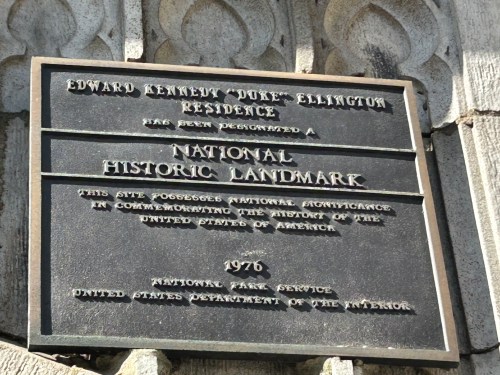
Places in Black History: Riverside Drive, Harlem, New York, New York

IMG_0653IMG_0655

Cultural Literacy: Noble Savage

OK, here is a Cultural Literacy worksheet on noble savage archetype. This is a half-page worksheet with a three sentence reading and three comprehension questions.

This was a concept, I can say with some pleasure, that my high school teachers disabused me of quickly. It’s a good thing, too, because (“Surprise! Surprise! Surprise!” as I delighted in hearing Gomer Pyle USMC say when I watched that show as a child), despite what this worksheet avers in placing the origin of this concept with Jean-Jacques Rousseau, it turns out not to be the case.

In fact, in addition to the many problems implicit in the term itself, it happens that Rousseau never uttered the term, and that the concept and the linguistic clothes it wears are the product of poet and playwright John Dryden, who invoked the stereotype in his play The Conquest of Granada by the Spaniards. When the term is next heard, it is from the mouths of physician James Crawfurd and anthropologist James Hunt, who erected the term as a signpost en route to scientific racism. Apparently, in the process of their “work,” Crawfurd deliberately misattributed noble savage to Rousseau.

So, with this short document, there is a lesson on debunking that I will write sometime in the future. I can tell you that only the most cursory research yielded the results in the foregoing paragraph. So, there is quite a bit of juicy stuff here–especially for inquisitive high school students.

Finally, if you want to see the decisive send-up of the noble savage stereotype (or, alternatively, if you’re interested in trying some excellent series television), check out Dallas Goldtooth’s hilarious performance as William “Spirit” Knifeman in Reservation Dogs–one of the best things ever to appear on television in my opinion.

If you find typos in this document, I would appreciate a notification. And, as always, if you find this material useful in your practice, I would be grateful to hear what you think of it. I seek your peer review.

The Weekly Text, 26 July 2024: A Lesson Plan on Motion Picture Genres from The Order of Things

Once again, from Barbara Ann Kipfer’s sublime reference book The Order of Things, here is a lesson plan on motion picture genres. To deliver this lesson (and bear in mind that any lesson under the heading of The Order of Things on this blog was designed for emergent and struggling readers as well as students of English as a new language) you will need this worksheet with reading and comprehension questions.

If you find typos in these documents, I would appreciate a notification. And, as always, if you find this material useful in your practice, I would be grateful to hear what you think of it. I seek your peer review.